5 Most Common Hydraulic Pump Faults: Symptoms, Root Causes & Fixes | Troubleshooting Hydraulic Piston Pump Problems

Hydraulic pumps, especially axial piston pumps like Kawasaki K3V/K5V, Rexroth A10VSO/A4VG/A2FO/A11VO/A8VO, and Komatsu HPV series, are the core power source for excavators, loaders, crane systems, industrial hydraulic stations, and concrete pumps. Unplanned hydraulic pump failures are the leading cause of equipment downtime, high maintenance costs, and reduced construction efficiency for global machinery owners and hydraulic engineers. Many operators struggle with hydraulic pump pressure problems, noisy operation, slow hydraulic movement, overheating, and oil leakage issues in daily equipment operation.
In this in-depth 2026 troubleshooting guide, we break down the 5 most common hydraulic pump faults with practical symptoms, verified root causes, field-tested solutions, and professional prevention tips. This actionable guide helps you diagnose hydraulic pump problems fast, fix recurring hydraulic faults, and extend hydraulic piston pump service life.
1. Low Pressure or No System Pressure (Most Common Hydraulic Pump Problem)
Symptoms
Equipment fails to lift heavy loads, struggles to work under rated load conditions, and the hydraulic system cannot build up standard working pressure. The machine runs normally at idle but loses power immediately under operation. This common issue is known as hydraulic pump won’t build pressure, frequently occurring in Kawasaki K3V, Rexroth A10VSO, and Komatsu HPV series piston pumps used in excavators and industrial hydraulic systems.
Root Causes
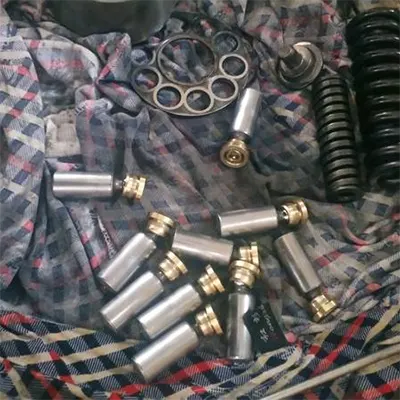
Internal component wear: Worn cylinder block and valve plate cause severe internal leakage, failing to maintain system pressure
Variable mechanism failure: Stuck pump regulator/booster or fatigued power spring leads to insufficient swash plate displacement
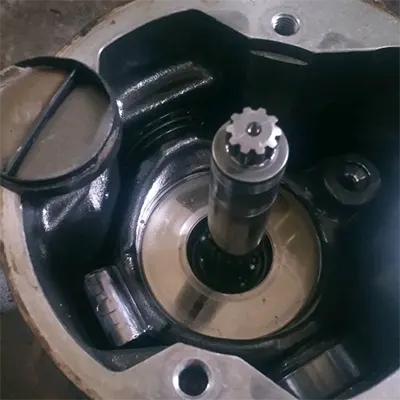
Swash plate abrasion: Worn swash plate prevents normal variable adjustment and pressure accumulation
Oil supply failure: Clogged hydraulic filter or air inhalation from suction pipeline results in inadequate oil supply and pressure loss
Overflow valve malfunction: Stuck or misadjusted main relief valve causes continuous pressure release
Solutions
First, test the pump’s internal leakage value to confirm wear degree. Replace worn cylinder blocks, valve plates, and booster spring assemblies. Clean the regulator and unclog stuck valve cores. Inspect all suction line seals to eliminate air inhalation. Replace hydraulic oil and filter elements regularly to ensure stable oil supply and pressure output, effectively fixinghydraulic pump low pressure and no pressure issues.
Prevention Tip: Avoid long-term idle operation and regular overloading; use high-precision matching pump accessories to reduce internal wear.
2. Insufficient Flow & Slow Hydraulic Movement
Symptoms
All working actions operate slowly, especially compound movements (lifting + swinging + walking) that appear extremely sluggish. The equipment works smoothly at idle speed but loses flow and response speed once under load. This typical hydraulic pump low flow problem is a common fault of worn variable piston pumps in engineering machinery.
Root Causes
Reduced volumetric efficiency: Worn plungers, slippers, and cylinder block increase internal leakage and reduce effective output flow
Incorrect booster adjustment: Misadjusted regulator limits the swash plate’s maximum inclination, resulting in insufficient pump displacement
LS valve failure: Stuck load sensing valve causes abnormal pressure difference, failing to feed real-time load signals
System air & blockage: Air trapped in the hydraulic system or blocked oil suction pipeline hinders normal flow output
Solutions
Detect the actual output flow and volumetric efficiency of the hydraulic pump. Replace severely worn plungers, slippers, and cylinder block assemblies. Clean the LS load sensing oil circuit and recalibrate the booster power and pressure difference parameters. Remove pipeline blockages and repair air leakage points to restore stable flow supply and solve slow hydraulic cylinder movement and low pump flow faults.
Prevention Tip: Strictly control hydraulic oil cleanliness; avoid mixed use of different oil types to prevent valve core clogging.
3. Abnormal Noise & Severe Vibration
Symptoms
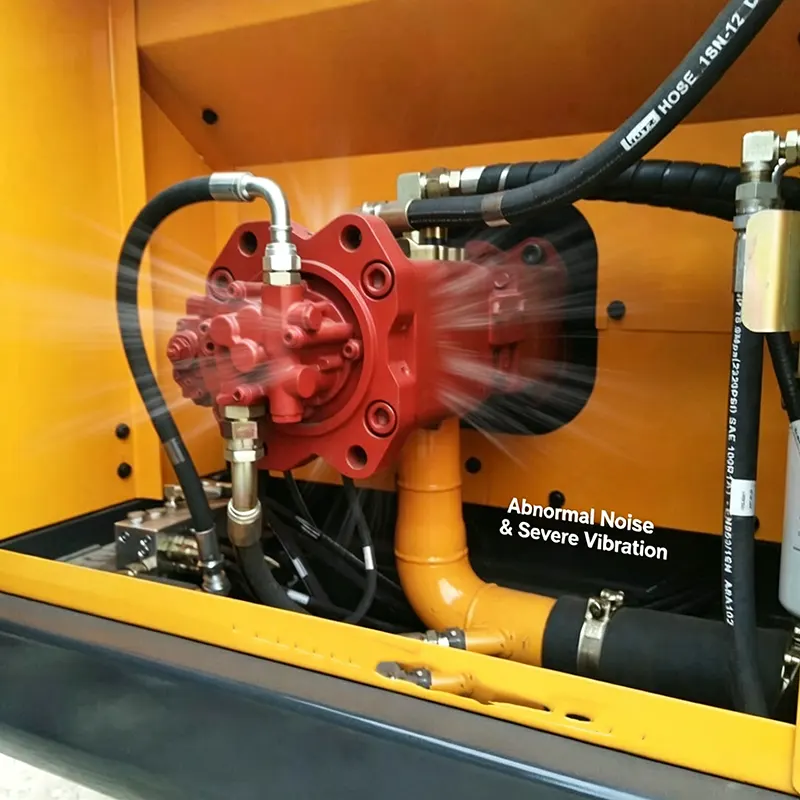
The hydraulic pump emits harsh buzzing, hissing, or metal knocking noises. Noise and vibration intensify as engine speed increases, causing overall machine jitter. Long-term abnormal noise will accelerate component damage and lead to pump scrapping. Hydraulic pump cavitation noise and excessive vibration are top complaints from machinery maintenance teams.
Root Causes
Internal friction pair wear: Loose and worn plungers, slippers, and return plate create excessive operating clearance and metal friction noise
Cavitation & air inhalation (top reason): Air entering the oil suction chamber causes cavitation, producing sharp buzzing noise and impact vibration
Bearing failure: Worn bearings lose positioning accuracy, causing eccentric operation and abnormal vibration
Oil contamination: Impurities in dirty hydraulic oil scratch precision friction pairs, triggering abnormal friction and noise
Solutions
Prioritize inspecting the suction pipeline, joints, and oil seals to eliminate air leakage and cavitation. Disassemble the pump to check and replace worn bearings, slippers, and return plates. Drain contaminated hydraulic oil, clean the oil tank, and install high-precision filter elements to protect internal precision components, completely resolving hydraulic pump making loud noises and vibrating excessively.
Prevention Tip: Regularly inspect suction pipeline tightness; avoid running the pump with insufficient oil volume.
4. Rapid Overheating & Excessive Temperature Rise
Symptoms
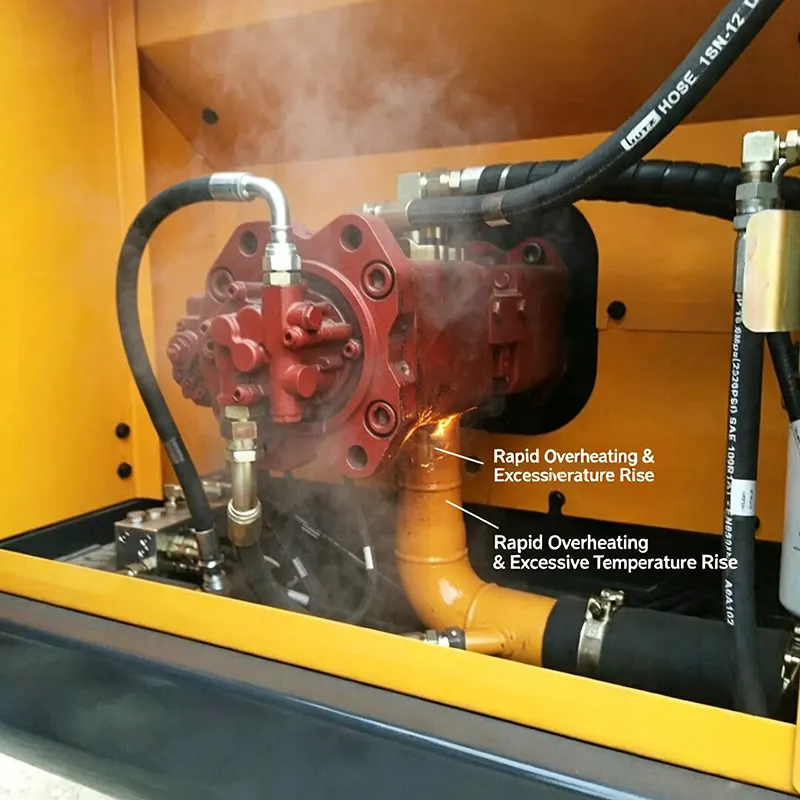
Hydraulic oil temperature rises rapidly after short-term operation. The oil becomes thin and low-viscosity, resulting in reduced system power, slow actions, and overheated pump body and pipelines. Continuous high temperature will accelerate oil aging and seal failure. Hydraulic pump overheating and high hydraulic oil temperature greatly shorten the service life of the entire hydraulic system.
Root Causes
Excessive internal leakage: Worn internal parts cause continuous internal leakage, converting hydraulic power into heat energy
Stuck control valves: Blocked pressure control valve and LS load sensing valve lead to long-term overflow heat generation
Poor heat dissipation: Blocked radiator dust and oil dirt reduce heat exchange efficiency
Substandard hydraulic oil: Degraded, expired, or mismatched hydraulic oil causes poor lubrication and increased heat generation
Solutions
Test pump internal leakage to confirm wear status and replace damaged internal accessories. Clean pressure control valves and load sensing valve groups, then recalibrate system working pressure. Thoroughly clean the radiator to restore heat dissipation efficiency. Replace with standard high-quality hydraulic oil suitable for the equipment model to fix hydraulic pump overheating and fast temperature rise problems.
Prevention Tip: Avoid long-term high-load continuous operation; clean the radiator every 3 months in high-temperature seasons.
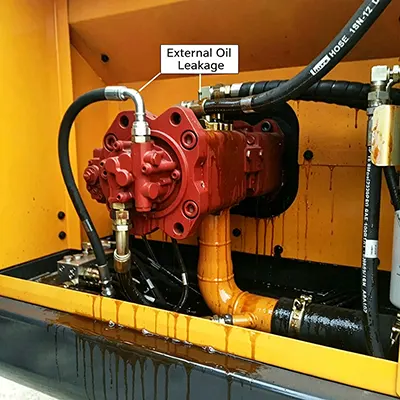
5. External Oil Leakage
Symptoms
Visible oil seepage or dripping appears on the pump shaft head, end cover, flange surface, and oil port joints. External oil leakage causes oil waste, equipment contamination, and hidden safety hazards, and will aggravate internal component wear over time. Hydraulic pump shaft seal leakage and flange oil leaks are the most frequent external failure types.
Root Causes
Shaft seal damage: Aging, worn or scratched main shaft oil seal causes shaft head oil leakage
Sealing component aging: Hardened and deformed end cover O-rings and gaskets lose sealing performance after long-term use
Installation deviation: Excessive installation concentricity deviation and long-term equipment vibration damage seals
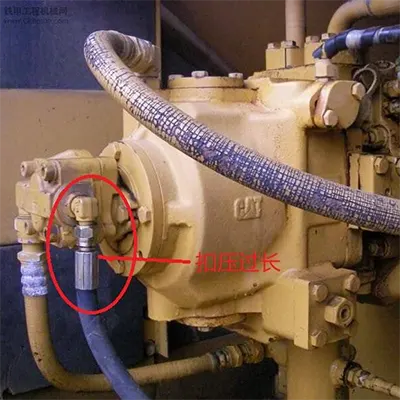
Overpressure impact: Long-term over-standard system pressure continuously impacts and damages sealing parts
Solutions
Replace the main shaft oil seal and full set of matching sealing accessories. Correct the pump installation coaxiality and add vibration reduction gaskets to reduce operating vibration. Adjust the system relief pressure to the factory standard range to avoid overpressure impact on seals, permanently solving hydraulic pump external oil leakage issues.
Prevention Tip: Replace all sealing parts uniformly during pump overhaul; avoid violent vibration and overpressure operation.
Core Conclusion & Professional Maintenance Guide
Statistically, over 90% of hydraulic pump failures are progressive damage, not sudden breakdowns. The four core inducements are internal component wear, system air inhalation, hydraulic oil contamination, and stuck control valves. Scientific daily maintenance and high-precision replacement accessories are the most effective ways to reduce failure rates, fixcommon hydraulic pump troubleshooting issues, and extend pump service life.
For engineering machinery owners and maintenance teams, timely fault diagnosis, regular oil replacement, and standardized accessory replacement can save huge long-term maintenance and downtime costs.
PRUN Hydraulics specializes in high-precision OEM replacement parts for mainstream hydraulic piston pumps, including Rexroth A10VSO/A4VG/A2FO/A11VO/A8VO, Kawasaki K3V/K5V, and Komatsu HPV series. All accessories adopt strict dimensional tolerance control and 100% factory testing, featuring high wear resistance, stable compatibility, and long service life. We provide one-stop hydraulic pump repair and troubleshooting solutions for global clients, helping you reduce equipment failure rate and overall operating costs.
